Bulgaria election puts geopolitical direction in focus

Bulgaria’s presidential election is set to test the country’s geopolitical direction, with relations with Russia, support for Ukraine and growing security concerns in the Black Sea region emerging as key campaign issues.
The first round is scheduled for Oct. 25, with a runoff expected on Nov. 1 if no candidate meets the constitutional requirements for an outright victory.
The contest has narrowed to incumbent President Iliana Yotova, backed by Prime Minister Rumen Radev’s Progressive Bulgaria party, and former caretaker Prime Minister Andrey Gyurov, who is supported by opposition parties.
The election follows Progressive Bulgaria’s victory in April, when it secured 131 seats in the 240-member parliament, ending years of political fragmentation.
Foreign policy divides leading candidates
Stoyan Panov, a senior research fellow at the Sofia-based Institute for Global Analytics, said foreign policy and security were among the main differences between the two leading candidates.
He described Gyurov as strongly oriented toward the European Union and the transatlantic alliance, while characterizing Yotova’s position as more ambiguous.
Panov also pointed to reported drone attacks on four merchant ships in Bulgaria’s maritime zones, saying the government’s response had become an important campaign issue. Bulgarian authorities initially said there was insufficient evidence to determine responsibility for the incidents.
The government’s approach to Ukraine has also drawn scrutiny. Since taking office in May, it has halted military deliveries to Kyiv following 13 aid packages, withdrawn from the Coalition of the Willing in July and opposed the EU’s 21st sanctions package against Russia.
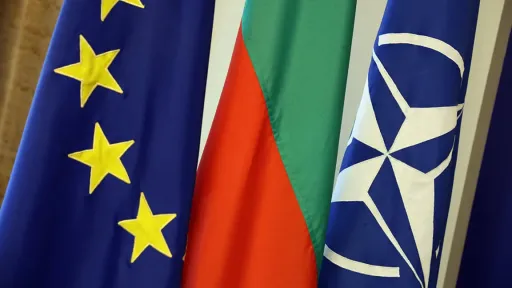
Mariyan Sabev, a senior security analyst at the Sofia-based Center for the Study of Democracy, said Bulgaria’s membership in the EU and NATO remained firmly established, regardless of the presidential election.
However, he noted that the president could influence how consistently the country upholds its international commitments through diplomatic messaging, defense priorities and public positions on international developments.
Under Bulgaria’s constitution, the government directs foreign policy, while the president represents the state internationally and has responsibilities related to defense and national security.
Sabev said Gyurov’s record as caretaker prime minister included approving a bilateral security agreement with Ukraine in March, while Yotova’s longstanding political partnership with Radev had made her approach relevant to the government’s broader foreign policy direction.
Black Sea security raises stakes
The election comes amid growing concern over security in the Black Sea, where attacks involving commercial vessels have added to regional tensions.
Analysts say the candidates’ positions could influence Bulgaria’s diplomatic priorities and its approach to cooperation with European partners, particularly on Ukraine and relations with Moscow.
Although Bulgaria remains a member of both the EU and NATO, recent government decisions on military assistance and sanctions have prompted questions about how Sofia intends to balance its alliance commitments with its approach toward Russia.
Power concentration raises questions over checks and balances
The presidential race is also testing Bulgaria’s institutional balance following Radev’s resignation from the presidency in January to enter party politics.
Yotova, his former vice president, assumed the office and is now seeking a full mandate. A victory for her would place both the presidency and government under the influence of the same political camp.
Panov questioned whether such an arrangement could weaken effective scrutiny of government decisions, while Sabev said it would test whether the presidency continued to exercise its oversight responsibilities when aligned politically with the government.
A victory for Gyurov, by contrast, could preserve a degree of institutional separation, allowing the presidency to scrutinize government policy even without direct control over executive decision-making.
The campaign is also being shaped by economic concerns. Inflation exceeded 5.1% in August, contributing to public dissatisfaction alongside frustration with political institutions.
Turnout and runoff could shape final result
Sabev estimated that turnout could reach around 36%, below the 50.7% recorded in April’s parliamentary election. He attributed the expected lower participation to voter fatigue and perceptions that the presidency has limited executive authority.
A Gallup International survey cited by Sabev placed Yotova at 44.9% and Gyurov at 24.8%. Kostadin Kostadinov, leader of the pro-Russian Revival party, is also contesting the election.
Under Bulgaria’s constitutional rules, a candidate must secure more than half of the valid votes and turnout must exceed 50% of registered voters to win in the first round. Otherwise, a runoff is held between the two leading candidates.
The country’s large diaspora and outdated electoral rolls have made meeting the turnout threshold difficult, analysts say.
Sabev described Yotova as the leading candidate in the cited polling, while Panov cautioned that the outcome could be closer than expected because voters may assess presidential candidates differently from political parties.
The result will determine who occupies Bulgaria’s presidency for the next term and provide an indication of public attitudes toward the country’s foreign policy, domestic governance and institutional balance.
Source:AA